The people
The team that kept solving
A group of engineers, network specialists, and one or two people whose job description has changed four times. Long-tenured, opinionated, and unusually patient with paperwork.
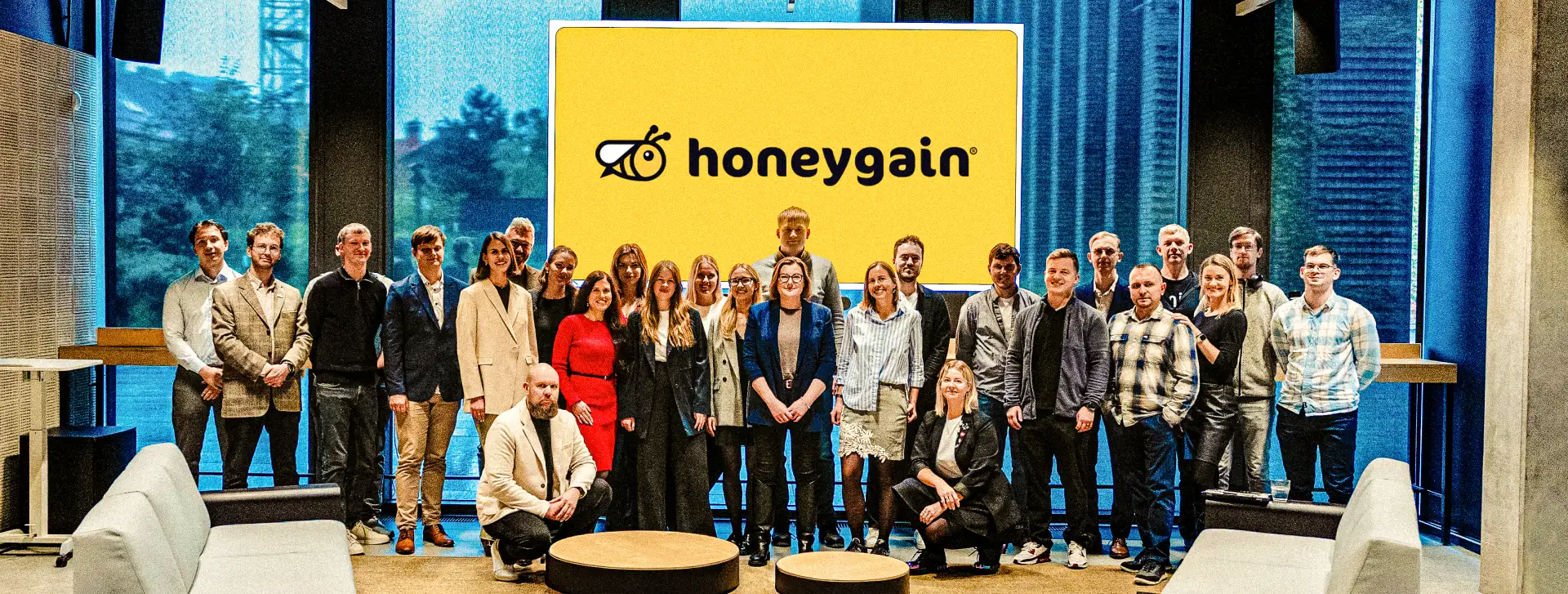
The team, photographed
“We’re the people who kept reading the room: curious, stubborn, and still committed to the same idea we started with: users deserve clarity, choice, and consent.”
Your guides
Partnerships start with a name, not a ticket




About / The long arc
We didn't set out to build a gateway. We arrived at one by solving forward
The AI Gateway exists because each problem we solved revealed a larger one underneath it. We didn’t pivot. We kept reading the room and the room kept getting bigger, until the thing we’d quietly built turned out to be the gateway between consenting users and the AI systems that need them.
The eras / 01 → 04
Four problems, in the order we met them
01
2019 - ORIGIN
THE SMALL PROBLEM
Most people's internet sits idle most of the day
The first problem was almost embarrassingly practical. Residential connections were paid for around the clock and used a fraction of the time. Enterprises needed legitimate, distributed access to the public web. Nobody had built a clean way to connect the two without going somewhere shady.
So Honeygain was built. A consumer app, a clear opt-in, a payout. Simple. The novelty wasn’t technical. The novelty was asking permission in a category that historically didn’t.
“If you want bandwidth from people, you have to tell them, pay them, and let them leave anytime if they want to.”
02
The middle years
A bigger PROBLEM
Apps were drowning in ads, and users were drowning with them
Developers came to us with a different question than the one we’d been answering. They didn’t want to run another network – they wanted a way to make money that didn’t require pasting another banner over their product. The unit economics of mobile were getting worse. The user experience was getting worse with them.
That’s when we stopped being only a consumer app with a side-business and started becoming a module. A small, embeddable piece of infrastructure other products could install, with consent baked in at the surface and revenue flowing underneath.
“The same mechanic that worked for one app could quietly work for thousands if we made it safe to defend internally.”
03
Recent
A category-sized problem
Trust in the bandwidth-sharing space was collapsing
The market had a choice: maximize volume or build trust.
Many operators optimized for volume, with limited disclosure, weak vetting, and little accountability for who bought access or how it was used. The consequences were predictable: misuse made headlines, app stores tightened policies, and developers grew wary of the category.
We chose the harder path. We verify every commercial buyer, review every integrating app, and remove partners who violate our standards, even when it costs us meaningful revenue.
Because the real question was no longer, “Can bandwidth be monetized?” It was, “Can this infrastructure layer be trusted?” We built our business around answering yes.
“Scale without standards is just a slow-moving liability. We picked standards first.”
04
Now
The current problem
AI needs a real-time view of the open web - and a clean way to reach it
Models, agents, and search systems now depend on reading the public web continuously, from many places, without breaking it. That demand isn’t going away. The question is whether the supply that meets it will be sourced cleanly. With consent, transparency, and oversight or will it be pulled from the same shadowy corners we spent years walking away from?
This is the moment the module became a gateway. Not a metaphor an actual position in the stack. On one side: opted-in users and the apps they trust. On the other: the AI systems and web-intelligence platforms that need a defensible way through. Everything we’d built before – the consent flow, the embedded module, the review process, the trust apparatus – turned out to be the architecture of a gateway. We just hadn’t called it that yet.
“We’re not an AI company. We’re the gateway underneath it – the part that has to be defensible when someone asks where the connection came from.”
The ladder
Each problem made the next one visible
STEP 01
One person's idle bandwidth
A consumer app, an opt-in, a payout. Provable on a single household.
STEP 02
One person's app's revenue gap
A drop-in module that gives developers a non-ad revenue layer without burning UX.
STEP 03
Choosing trust over volume
KYC, app review, due diligence and enforcement strong enough to drop partners who break the rules.
STEP 04
A generation of AI's web access
A consent-based, audited gateway that AI and web-intelligence systems can actually defend using.
What didn't change across the eras
The rules we wrote on day one and refused to break since
01
Consent is the product
If a user can’t see it, understand it, and leave it, we won’t ship it. Everything else is downstream.
02
Know who's buying
Gateway access is given under KYC and contractual constraints. Anonymous demand is not a market we serve.
03
Review every integration
Apps don’t get monetization until we’ve looked at them. Self-serve is convenient. We chose the slower path.
04
Embrace the bad days
When something goes wrong, we say so, fix it, and tighten the gate. Silence is how categories rot.
05
No personal data, ever
Files, cookies, history, identity – none of it. We move bandwidth, not people.
06
Boring beats clever
Encryption, monitoring, audits, paperwork. The unglamorous work is what makes a gateway survivable.
What's next
The role we've quietly taken on
Somewhere along the way we stopped being a monetization product and started being something else: the people beneath AI products.
We didn’t plan the role. We’d already done the work it requires: almost a hundred million devices under consent, every buyer vetted, every integration reviewed. The position was vacant and we were standing in it.
The gateway will look different in three years, but the test won’t: when scrutiny comes from a user, a legal team, a regulator, a journalist – can the partner stand behind what we built together?
– The AI Gateway team, at Honeygain